What We Do

Services

From a full build down to a single rotted board, here's what we take on.

Home › Services

Everything we take on

Every job below is one we do ourselves across Atlanta.

Deck Installation

We frame new decks on concrete footings poured below grade, sized to your soil and the load the deck will carry. Joists go in at 16 inches on center for standard boards, tighter if you're running composite, and every ledger board gets flashed before the house siding goes back on.

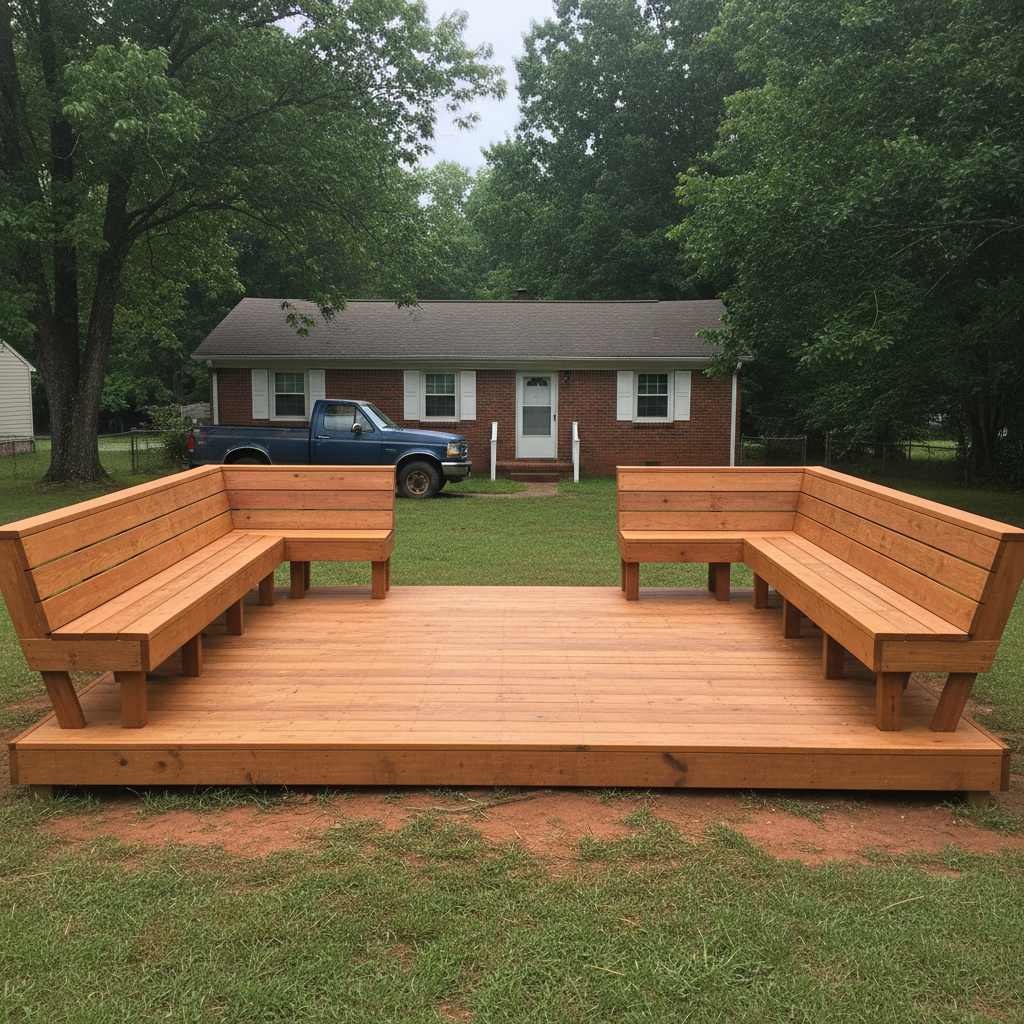
Custom Deck Design

We draw the layout around how you actually use the yard, not a stock rectangle. Multi-level decks, built-in benches, a landing halfway down the stairs, whatever makes sense for the lot.

Deck Repair

Soft spots, bouncy stairs, railings that move when you grab them. We find the actual cause, usually a rotted ledger board or a joist hanger that rusted out, and fix that instead of just swapping the board on top.

Deck Staining & Sealing

Wood decks in Georgia gray out and start cupping within a year or two without a sealer coat. We pressure wash first at low PSI so we don't gouge the grain, let it dry a few days, then apply a stain rated for horizontal surfaces.

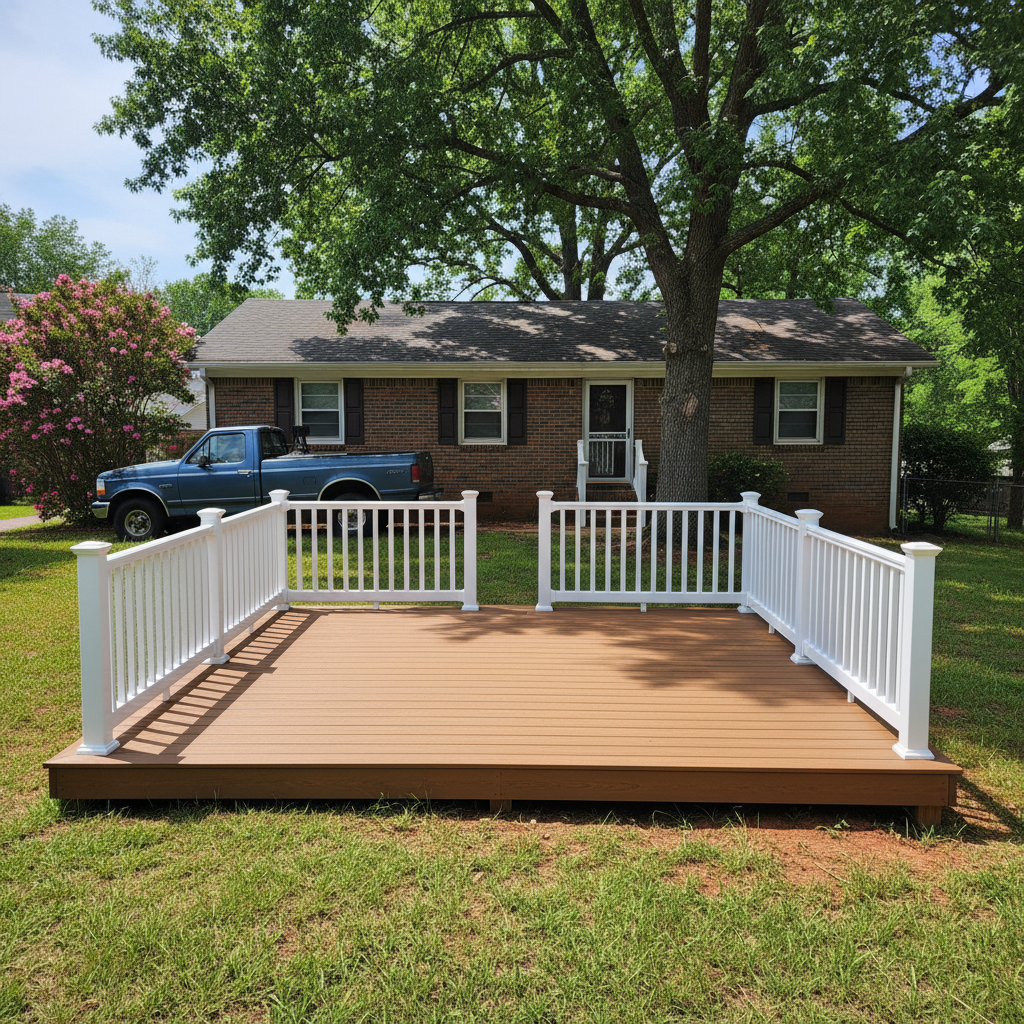
Composite Decking Installation

Boards like Trex or TimberTech cost more up front but don't need staining and won't splinter underfoot. We use hidden fastener clips on most composite jobs so the deck surface has no screw heads at all.

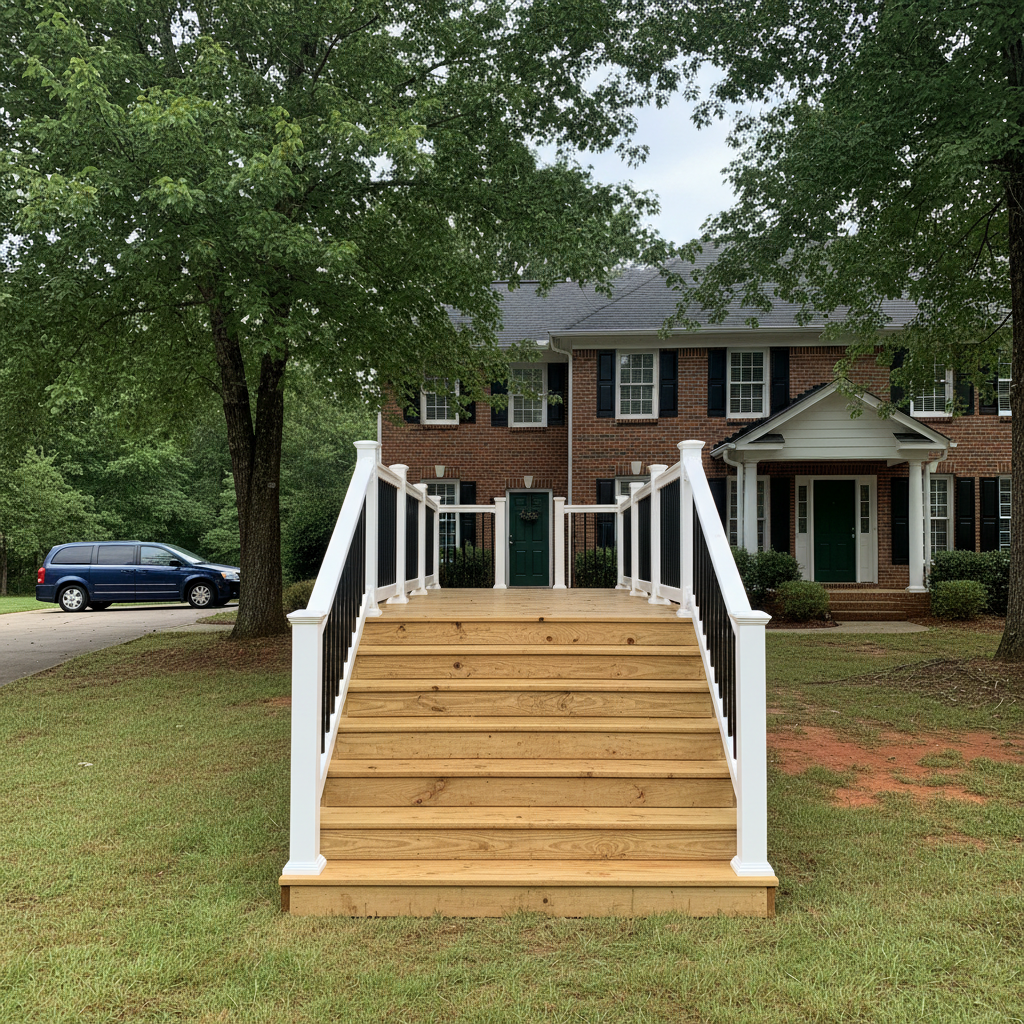
Deck Railing Installation & Repair

Railings get built to the 36-inch height code requires, with baluster spacing that fails the 4-inch sphere test on purpose, meaning a toddler can't get a head through it. We'll match wood railing to an existing deck or switch you over to cable or aluminum.

Deck Resurfacing

If the framing underneath is still solid, we strip the old decking and replace just the boards and railing. Costs less than a full rebuild and the new surface still gets a proper gap for drainage.

Deck Demolition & Removal

Old decks get hauled off and the site cleared, including any footings you don't want to reuse. We check whether the existing footings can bear your new design before we decide what stays.

Screened Porch & Deck Combinations

A lot of our Atlanta clients want part of the deck open and part screened in against mosquitoes. We frame the screened section with its own roof tie-in so it doesn't rely on the deck ledger alone for support.

Pergolas & Deck Shade Structures

A pergola over part of the deck cuts down the afternoon sun without blocking the whole yard view. We attach posts to their own footings, not just lagged into the deck frame, since that connection takes real wind load.

How It Works

Four steps, and no surprises in any of them.

01

We come and look

You tell us what you want doing, we look at what is actually there, and we ask the awkward questions early.

02

You get a price

In writing, itemised, free. If something might add cost later we flag it now rather than at the end.

03

We do the work

Same crew throughout. We cover your floors, keep the dust down and tidy up before we leave each day.

04

We walk it with you

You point out anything you are not happy with and we fix it before the invoice, not after.

Where We Work

All of this, across Atlanta, GA

Deck installation and repair across the Atlanta metro, not just the city itself.

Atlanta, GA
Sandy Springs, GA
Roswell, GA
Johns Creek, GA
Alpharetta, GA
Marietta, GA
Smyrna, GA
Brookhaven, GA
Dunwoody, GA
Peachtree City, GA
Kennesaw, GA
Common Questions

Things worth asking

Questions that usually come up once a deck project is actually underway.

Do I need a permit to build a deck in Georgia?
Most Georgia municipalities require a building permit for any deck attached to the house or raised more than 30 inches off the ground. A licensed deck builder typically files the permit application and schedules the required inspections as part of the project.
How long does it take to build a deck?
A standard single-level deck usually takes one to two weeks from footing excavation to final board, weather permitting. Multi-level decks, screened porch combinations, or composite installations with custom railing can run three to four weeks.
Can a deck be built on a tight budget?
Pressure-treated pine with a simple rectangular layout and standard railing keeps costs lowest, while still meeting code for safety. Composite boards, cable railing, and multi-level designs add cost, so a contractor can usually suggest where to trim without cutting structural corners.
Do you guarantee your deck work?
A reputable deck builder typically offers a workmanship warranty covering framing and installation, separate from the manufacturer's warranty on lumber or composite boards. Warranty terms and length should be stated in writing as part of the contract.
Who do I talk to during the project, the owner or the crew?
On most deck projects, a single point of contact handles scheduling and questions, while the crew on site handles the daily build. Homeowners should expect updates at key stages, such as footing inspection and final walkthrough, rather than only at the start and end.
What decking materials do you work with?
Common decking materials include pressure-treated pine, cedar, and composite brands like Trex or TimberTech, each with different costs and maintenance needs. Pressure-treated pine is the cheapest upfront but needs restaining every two to three years, while composite costs more initially but needs only occasional washing.
Can I still use my yard while the deck is being built?
Yard access is usually limited near the construction zone for safety, especially during footing excavation and framing, but the rest of the property typically stays usable. Homeowners with pets or young children should plan to keep them away from the immediate work area.
What should I do to prepare my yard before deck construction starts?
Clearing furniture, grills, and potted plants from the deck area and marking any buried sprinkler lines or invisible fence wires helps avoid delays. Access for equipment and material delivery, such as a clear path from the driveway, also speeds up the start of the job.
What if you find rot or damage once the old deck is torn off?
If a rim joist, ledger board, or house framing is found rotted during demolition, a contractor should stop and flag it before proceeding, since building a new deck over compromised framing just hides the problem. Additional repair costs are typically quoted separately once the extent of the damage is visible.
How do I take care of a new deck once it's finished?
Wood decks need resealing roughly every two to three years to prevent graying and cupping, while composite decking mainly needs periodic washing to remove pollen and mildew. Keeping gutters clear and furniture feet from trapping moisture against the boards extends the life of either material.

Not sure what you need?

Describe the problem and we will tell you what it probably is. No obligation.

Call (770) 284-3549